
The Remuneration Principles and Practices for Artists and Arts Workers document sets out the principles for modelling good practice for the engagement and remuneration of artists and arts workers. It can be used by artists and arts workers, arts organisations and those engaging artists.
Principles:
Arts, cultural and creative practice makes an important and significant contribution to the cultural, social and economic wellbeing of the ACT. The value of arts and creative work is recognised and remunerated fairly.
All creative work is, by default, paid work. That is, no artists and arts workers should be expected to work for little or no pay.
Where artists and arts workers agree to work unpaid, for low pay or ‘in kind’ compensation, agreement must be reached about the benefits and/or value for each party.
Remuneration may take a range of forms, including exchange of goods or services or reciprocity acknowledging and respecting the artist, arts worker and their work.
Practices:
Remuneration practices must comply with relevant legislation and other legal requirements.
Sector organisations should take account of remuneration guidelines, where they have been established.
Remuneration practices should reflect good practice rather than minimum standards.
Remuneration practices must recognise artists’ and arts workers’ rights and interest in the work they create. Artists’ and arts workers’ copyright and intellectual property should be protected as both a moral and an economic right. Contractual arrangements should allow artists and arts practitioners to benefit from the future economic life of the work they create consistent with legislative requirements, including those under the Copyright Act.
Remuneration practices, where appropriate, should be equitable.
- All artists and arts workers should receive equitable remuneration.
- Where appropriate, experience and expertise should be recognised in remuneration levels.
- Equitable access to employment opportunities should be available for diverse communities irrespective of age, gender, ethnic affiliation, physical or other disability, sexual orientation, or religion.
Remuneration practices, where appropriate, should be transparent.
- Organisations engaging staff (including employees and contractors) have a remuneration policy agreed by its governing body and made publicly available.
- All communications between an artist or arts worker and the party engaging their services should be open and transparent to both parties.
- All work and roles in a project should be covered by a contract. The form of the contract should be proportionate to its value.
- All contracts should be negotiated in good faith, setting out the nature and scope of a project, the status of an engagement, associated taxes and benefits, and obligations of the employer as well as the artist or arts worker, and any dispute resolution clause.
- Artists and arts practitioners must be able to seek advice on any contract agreements they are party to.
- Payments or fees for all roles involved in a project must be visible in funding application budgets and post-project reports.
- Artists’ and arts workers’ fees should be ring-fenced to ensure they are protected against budget over-runs.
- Good faith negotiations should occur where cancellations result from events outside the control of the employer, with the principle that, where possible, contracts with artists and arts workers should be honoured.
- Conditions of payment must be clear (e.g. per word, per event, per season, or timing of payments).
Creative Workplaces
The Creative Workplaces website is a national resource hub that provides information on pay, working conditions, safety and respectful behaviour and includes referral pathways to external support services and a central library of existing tools, resources and support from across the creative industries.
Download the Remuneration Principles and Practices for Artists and Arts Workers
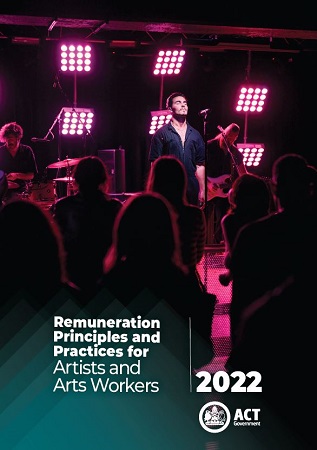
Image: Front cover of the Remuneration Principles and Practices for Artists and Arts Workers document featuring Kirklandd performing at the University of Canberra. Photo by Pew Pew Studio.